Beyond the Pogo Pin, Rethinking PCB Test Fixtures for Industrial Boards
Beyond the Pogo Pin: Rethinking PCB Test Fixtures for Industrial Boards
In the world of PCB manufacturing, the pogo pin is the undisputed king of testing. It’s the go-to solution for creating a temporary electrical bridge between a test environment and a device under test (DUT).
However, during the development of ADX—a specialized industrial board leveraging megaTinyCore for development within the Arduino IDE—we encountered a series of mechanical challenges that forced us to look beyond the standard pogo pin paradigm.
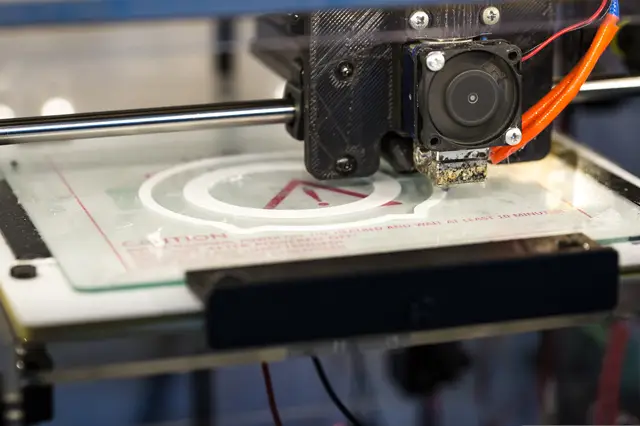
Image by Lutz Peter from Pixabay
The Problem: When Density Becomes a Burden
The ADX isn't a standard Arduino clone; it’s a board with a custom form factor designed for industrial applications, packed with GPIOs accessible through modern AVR microcontrollers. As we began designing the test fixture, we quickly hit what I call the "Pogo Pin Wall."
- The 1kg Pressure Barrier: Each pogo pin requires a specific amount of spring force to ensure a reliable connection. Because the ADX features a high pin density in a compact footprint, the cumulative downward force required exceeded the 1kg mark.
- Structural Integrity: Pressing a PCB with over 1kg of force isn't just a matter of "pushing harder." It requires a rigid, heavy-duty frame to prevent the board from flexing or the fixture itself from warping.
- The Automation Paradox: We initially aimed to automate the testing process. However, we realized that high-pressure "set and press" systems are incredibly sensitive to mechanical alignment. Automating this without damaging pins or pads would require a level of precision that makes the entire setup prohibitively complex and expensive.
Exploring Alternatives: The "Slot" Approach
We started asking ourselves: Does it have to be a vertical press? We looked at the mechanics of SD cards and SIM cards, which rely on sliding insertion rather than vertical pressure.
We initially considered using off-the-shelf connectors for these cards as our test interface, but we hit a physical limit: manufacturing tolerances. Standard card slots are designed for specific, tightly controlled substrate thicknesses. They lacked the mechanical compliance necessary to absorb the slight variations found in a standard PCB manufacturing run.
The DIY Innovation: 3D Printed Compliant Mechanisms
This led to a radical experiment: Can we 3D print a fixture that acts as its own spring?
The idea was to use a 3D printer to create a compliant mechanism—a single-piece structure that gains its motion and force from the flexibility of its materials.
- The Design: A custom-printed slot with integrated "plastic springs."
- The Interface: Applying copper foil tape to the contact surfaces of these printed springs to create the electrical path.
- The Goal: A smooth insertion/extraction feel that provides consistent contact pressure without the brute force of a dozen metal springs.
Key Insight: This process taught us that a test fixture is more than just an electrical bridge; it is a complex mechanical assembly. To be successful, it must achieve three-dimensional error absorption to handle inevitable physical variances.
The Reality of Engineering: A Productive Pivot
As is common in rapid development, the project took an unexpected turn. The final design of the ADX evolved to use IDC (Insulation-Displacement Contact) connectors for its primary I/O.
Because the testing procedure now involved physically plugging in these IDC cables anyway, the need for a specialized sliding or pressing fixture evaporated. The "high-tech" fixture became unnecessary because the board's own physical interface provided the solution.
Conclusion
While our custom 3D-printed spring fixture didn't make it to the production line, the investigation was far from a waste of time. It highlighted a fundamental truth in hardware development:
Electrical connectivity is a mechanical problem. Whether you are using pogo pins, edge connectors, or custom 3D-printed springs, the success of your test setup depends on how well your system absorbs mechanical error. Sometimes, the best fixture isn't the most complex one—it’s the one that the board design makes redundant.
#investigation #test #manufaturing #pogopin #circuit # design