Ep 02, Why the Arduino Opta Failed the Spirit of Open Source
Why the Arduino Opta Failed the Spirit of Open Source: The Tragedy of Being "Official"
In 2013, I first encountered the Arduino UNO. Like many of you, I felt a sense of "Hardware Omnipotence." I believed that with this tiny board and its vast ecosystem, I could control anything in the world.
However, as I moved from desktop prototypes to the harsh reality of the factory floor, I hit a wall—a wall made of vibrations, industrial noise, and the rigid logic of the "Official" product business.
The Arduino Opta was supposed to be the bridge between these two worlds. But instead of bringing the freedom of Arduino to industry, it became a cautionary tale: a "PLC Lite" that lost its soul in the pursuit of becoming an official industrial product.
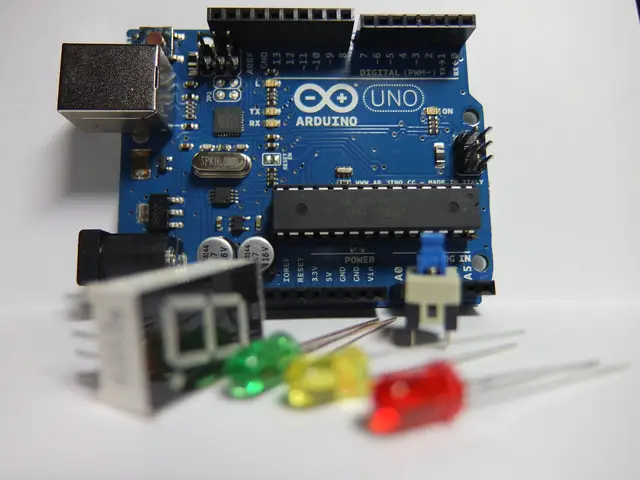
Image by Tiki Shabudin from Pixabay
1. The Burden of Being "Official"
I don't believe the team at Arduino intended to create a closed system. On the contrary, they likely fought to keep it as open as possible. But they were trapped by a structural irony: The Tragedy of Responsibility.
When a manufacturer releases an "Official" industrial product, they are no longer just selling a PCB; they are selling Guarantees and Liability. To guarantee that a device will function under heavy vibration for ten years, you cannot leave anything to chance. You must control the entire environment.
2. The Trap of "Hard Coupling"
This responsibility manifests in a specific engineering choice: The Enclosure.
To ensure industrial-grade reliability, the Opta utilizes a high-precision enclosure where the internal boards are connected via rigid Board-to-Board (B2B) connectors. This is the point of no return.
- The Mechanical Lock: Once reliability depends on the sub-millimeter precision of the enclosure, the "Open" nature of the hardware dies.
- The Warranty Barrier: A manufacturer cannot guarantee a system if a user inserts a third-party module with slightly different tolerances.
In their honest attempt to provide a "reliable" product, Arduino was forced to build a cage. This cage—the enclosure—became the gateway to Vendor Lock-in.
3. The Gravity of the "Product-centric" Model
This is not just an engineering mistake; it is a symptom of a Hardware-sales-driven Business Model.
If your revenue depends on the number of official boards sold, you are structurally incentivized to protect your ecosystem:
- You create a precision enclosure for "Reliability."
- You create proprietary expansion modules because third-party ones might "void the warranty."
- You create a paid, proprietary IDE to justify the "Professional" tag.
In the end, you aren't selling a platform for creators; you are selling a closed box.
4. An Identity Crisis: The "PLC Lite"
By following the rules of traditional industrial vendors, the Opta entered a battlefield where it could never win. It tried to compete with giants like Rockwell, Siemens, and Mitsubishi on their own terms—using Ladder Logic, proprietary expansion units, and closed ecosystems.
But we didn't need a cheaper, "Arduino-flavored" PLC.
What the world needed was a professional-grade hardware interface that stayed true to the modularity and decentralization that made Arduino great. By trying to be a "responsible" PLC, the Opta became PLC Lite: too limited for hardcore PLC veterans, and too restricted for creative Arduino engineers.
5. Beyond the Box: The "Industrial ATX" Vision
The failure of the Opta shows us that we cannot reach the next level of industrial automation by climbing the same mountain of "Product Selling." We need a new peak.
That is why I am developing ADX (Advanced Devices eXtended).
ADX is not intended to be just another product. It is an attempt to establish a Standard—the "Industrial ATX."
Why ATX?
In the 90s, the ATX standard liberated the PC from proprietary designs. It decoupled the motherboard from the case, allowing for an explosion of interchangeability and innovation. I believe the industrial world needs its "ATX Moment":
- Interchangeability: Just as you can fit any ATX motherboard into any ATX case, industrial components should be mix-and-matchable regardless of the manufacturer.
- Decoupling via "Soft Coupling": Instead of rigid B2B connectors, ADX utilizes "Soft Coupling" via locking IDC terminals and cables. By allowing for physical "play," we decouple reliability from the precision of a single manufacturer's enclosure.
- Democratization: We are moving away from selling boxes and towards a world where Intelligence (Digital Design & Code) is the value, and the hardware is a commodity that anyone can build, improve, and repair.
The era of waiting for an "Official" savior is over. It’s time to take the soul of Arduino back to the factory floor—without the cage.
#story #adx #arduino #history